CS2 Cache Key Positions: Control Spots, Angles, and Rotations
CS2 Cache Key Positions: Control Spots, Angles, and Rotations
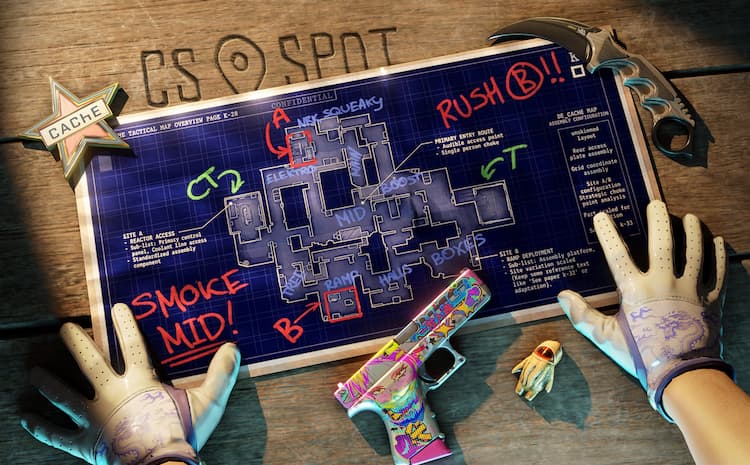
Cache is all about space, timing, and clean reads: A-site pressure, mid fights, B-site anchors, and the rotations that tie every round together. This overview covers the key positions that shape control on both sides, from early utility battles to late-round retakes. Read on to sharpen your Cache decision-making before the next match.
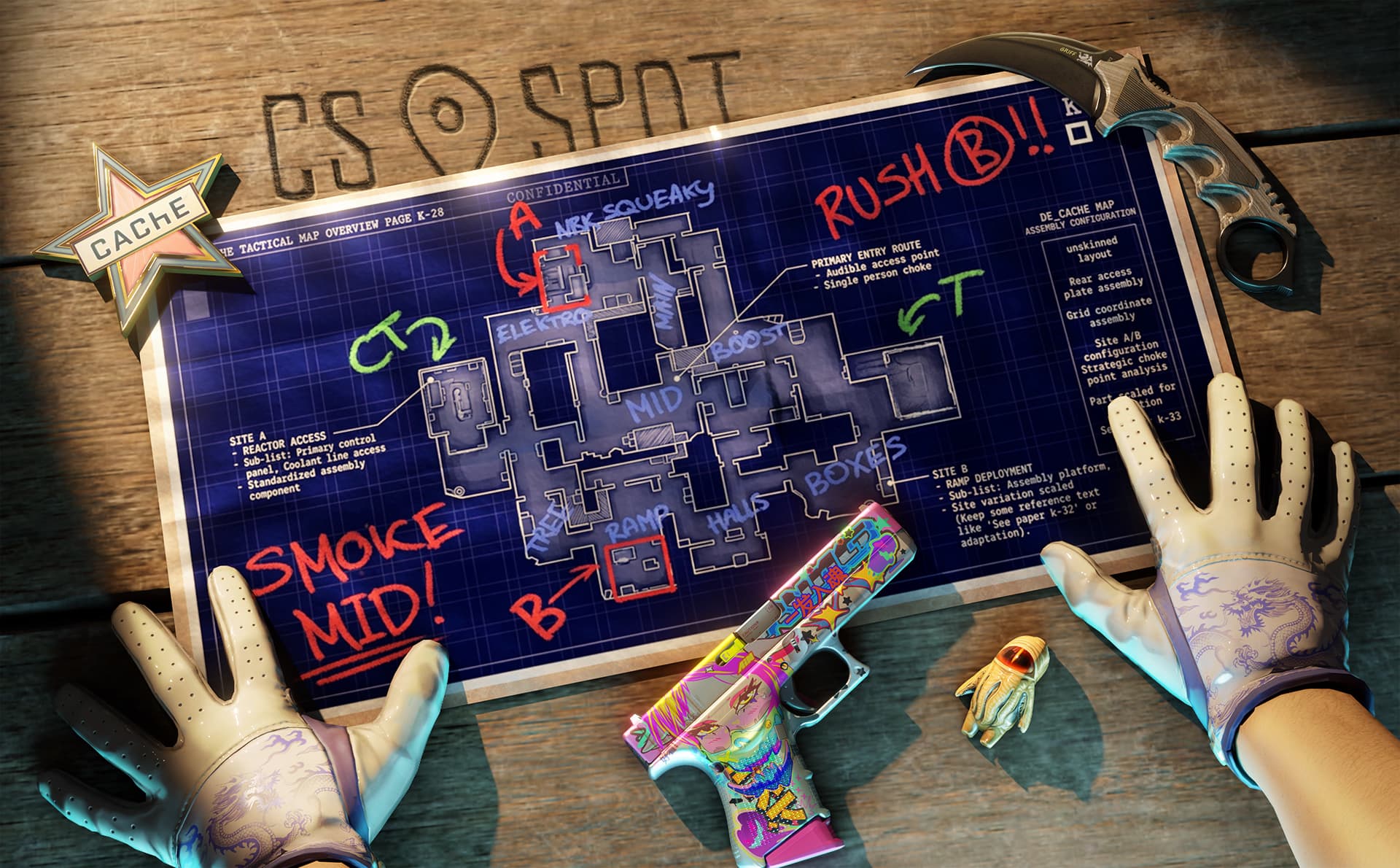
Cache Layout Basics: Sites, Mid, and Rotation Routes
Cache is a bomb defusal map set around Pripyat, Ukraine, with the Chernobyl Power Plant visible from T spawn. Its design has always been easy to read but hard to master:
Two bombsites built for direct fights;
A contested mid that can open both A and B;
Fast rotation lanes that reward sharp comms;
A-site angles that punish lazy clearing;
B-site chaos when Checkers and Heaven are not controlled together.
A-Site Control Spots for CT Holds and T Executes
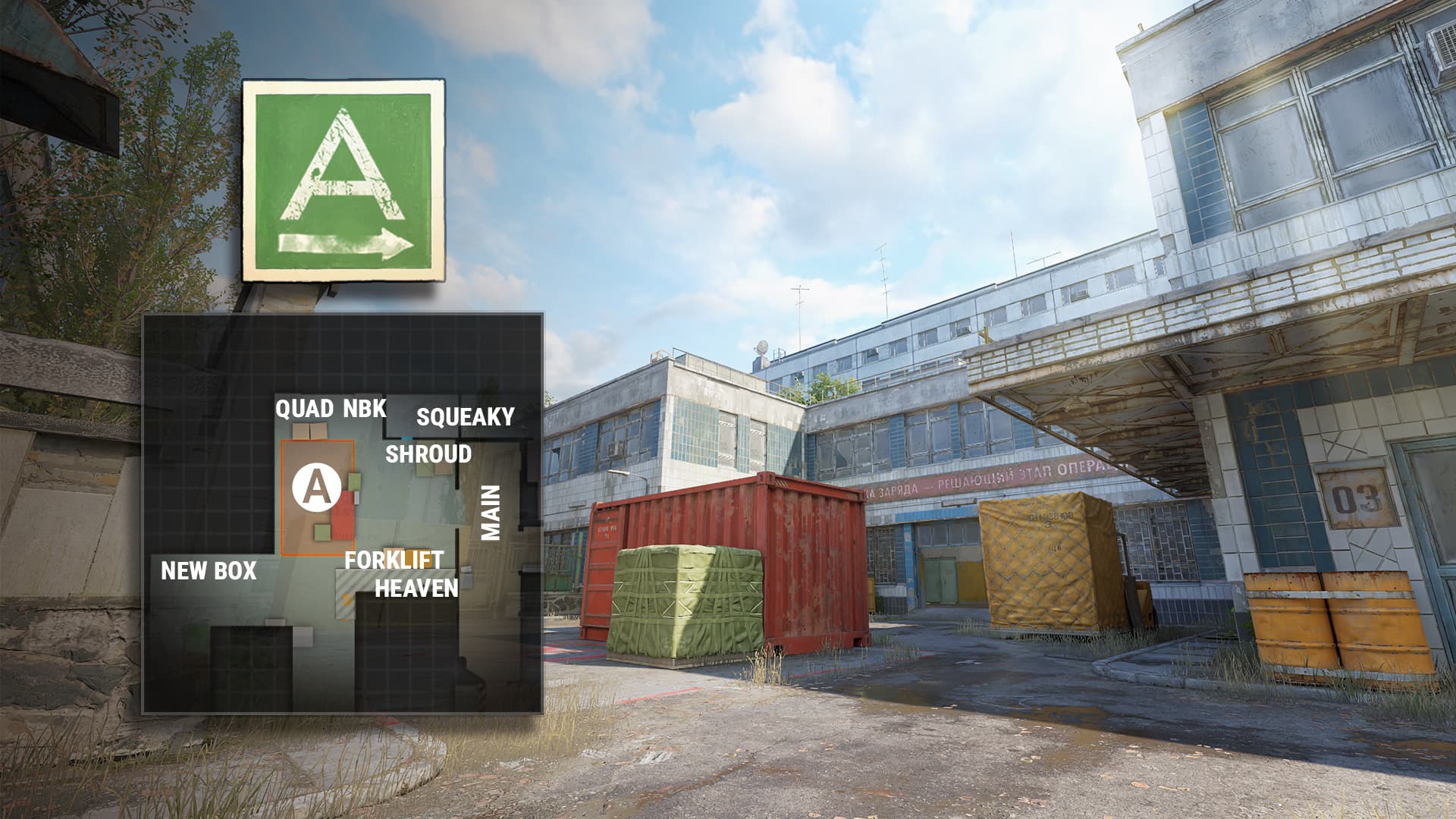
A-site is a parking-yard fight where small delays can decide the round. CTs usually build the hold around overlapping angles, with one player near Forklift, Quad, or Balcony and another watching Highway or Truck.
Area
Main value
Forklift
Punishes A Main contact and buys time for trades
Quad / Default Box
Gives a second layer once the first defender is pressured
Balcony
Adds a raised angle above Forklift and site traffic
Highway
Cuts into A from mid and pressures rotations
Truck / CT Halls
Supports retakes and late defensive swings
T-side A hits need discipline because A Main alone is rarely enough because CTs can tuck behind Forklift, Quad, NBK, and the red container area. Squeaky pressure changes the timing: once the door opens, defenders must look away from A Main, giving the entry pack a short but valuable window. Highway control adds the final layer, cutting mid rotations and forcing CTs near Truck or CT Halls into awkward fights.
Forklift, Quad, Squeaky, Balcony, Highway, and Default Plant
Forklift sits under Balcony and gives CTs cover against A Main, which is why Valve’s “Don’t forget to clear Forklift” line landed so well with Cache players. These A-site positions shape most executes:
Forklift: a common hiding spot under Balcony, dangerous if rushed past.
Quad: the four-box stack at the back of A-site, often used for late trades.
A Default: a safer plant spot because many defender angles cannot reach it cleanly.
Squeaky: both the blue-door room and the door itself, giving Ts a sharp entry point.
Balcony: the raised metal path above Forklift stretching toward Catwalk.
Highway: the narrow slope from mid into A-site.
The late Highway player is often better at cutting CT Connector than chasing kills.
Mid Control Positions: Garage, Boost, Vents, White Box, and Connector
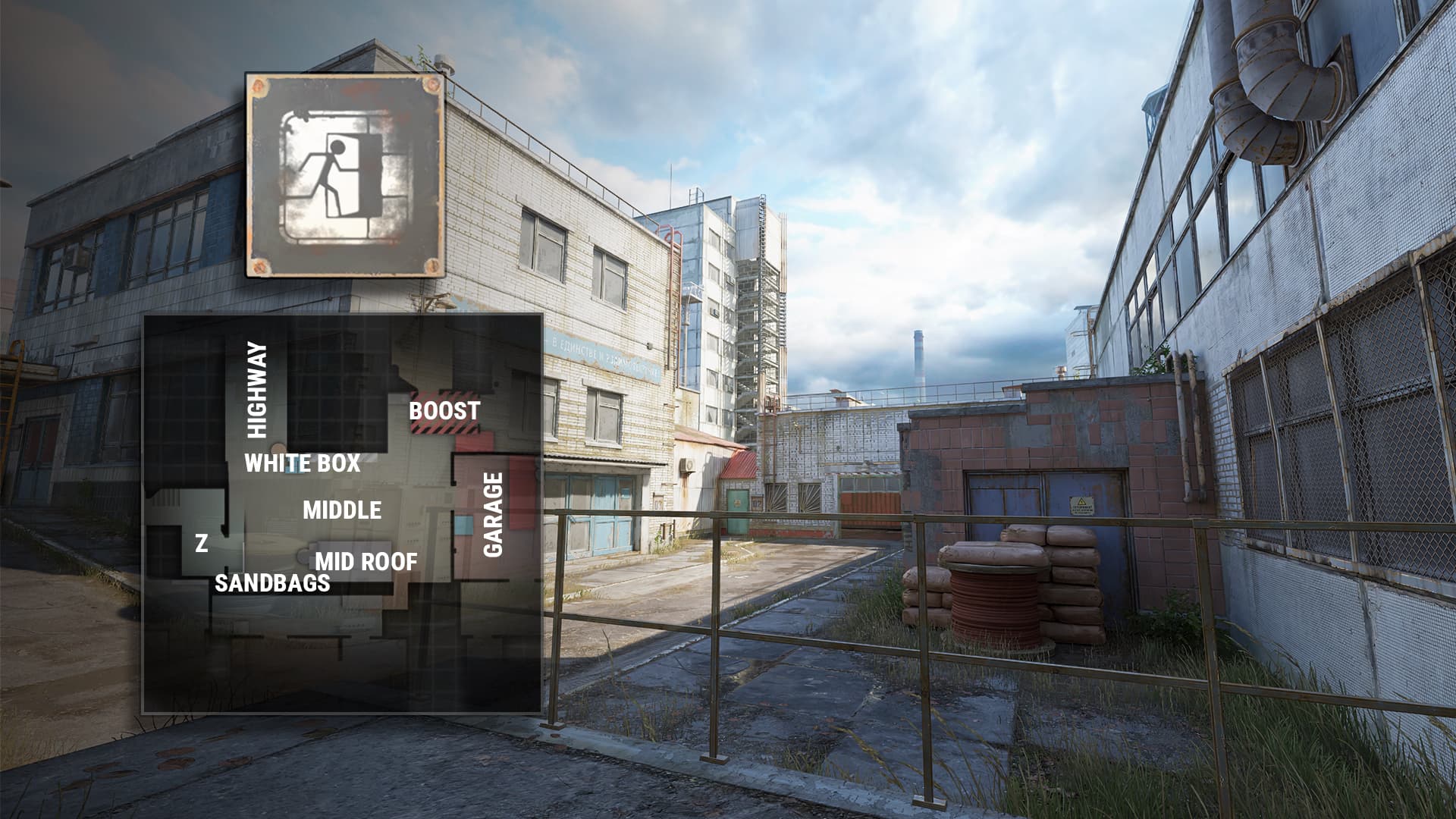
Mid is Cache’s pressure valve, linking Garage, Connector, and Highway, so losing it weakens both sites at once. Garage gives Ts their main mid route, Boost creates a higher fight over the lane, Vents connects mid to Checkers near B, and Highway opens the A split.
CT access into mid, now less movement-heavy in CS2
Highway
Route from mid into A-site and late lurk pressure
The CS2 remake added a visual overhaul and gameplay tweaks, including the removal of the ladder and scaffolding in Z, also known as CT Connector, and a self-boost on the Back Checkers boxes. CTs should treat White Box and Connector as survival spots, not ego-duel positions. T players should pair Garage pressure with Boost presence, then decide between Vents or Highway based on how the defense reacts.
B-Site Positions for Entries, Anchors, and Retakes
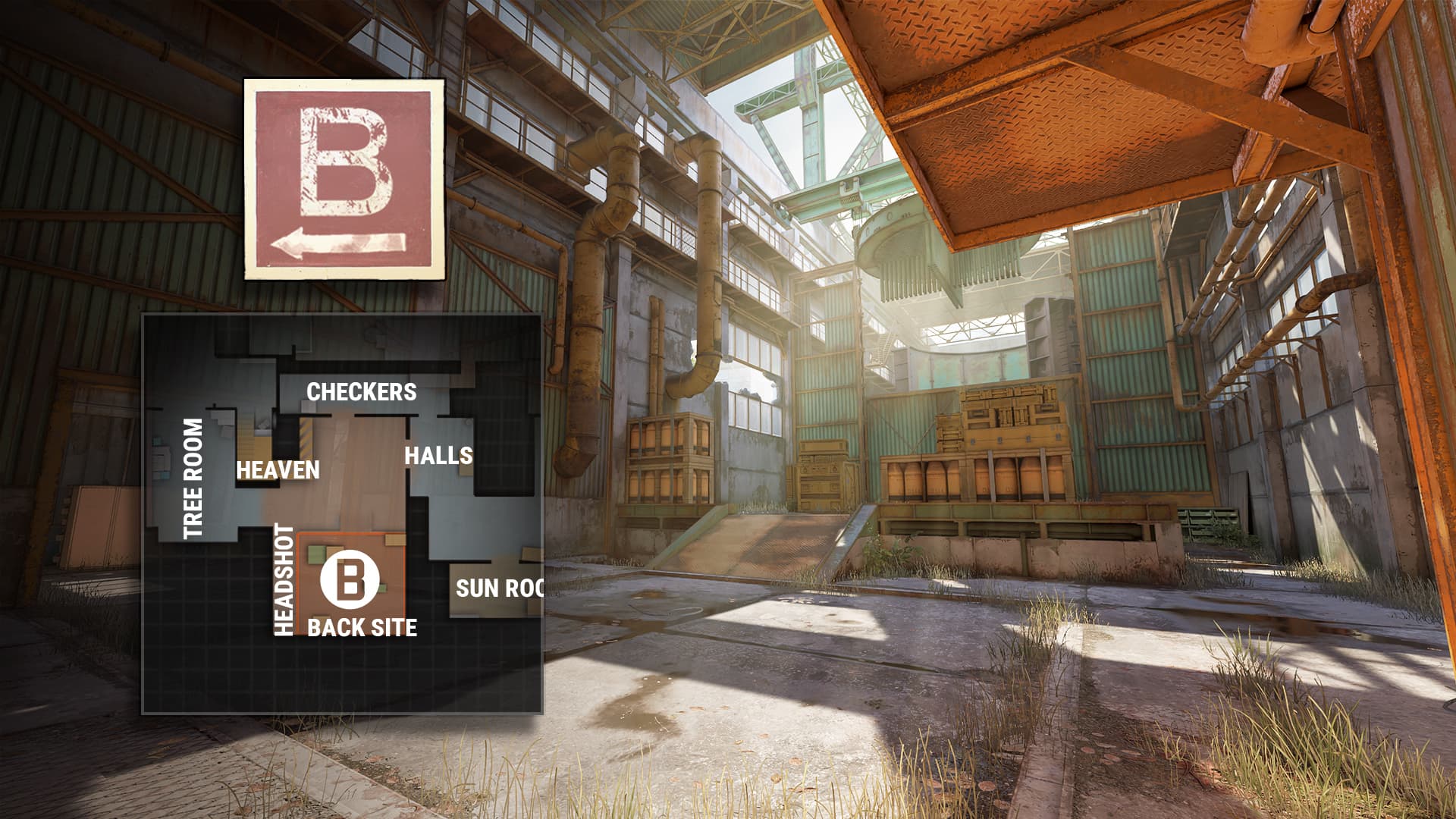
The site links to B Halls through B Main, to mid through Vents and Checkers, and to CT through Heaven and Rafters. Total CS describes Checkers as the room with the checkered floor connected to Vents, B Main, and B-site, while Heaven and Rafters form the raised CT platform above the site.
For CT anchors: Headshot, New Boxes, Back Site, and Close Left can steal kills, but they become traps without flash support. Heaven gives wider vision, though smokes and molotovs can cut it off from the lower site.
For B Main pressure: the anchor should instantly call whether Ts are committing through site, splitting from Checkers, or slowing down for a late plant.
For T entries: clear B Main Boxes, Checkers, Headshot, Close Left, then site boxes. The CS2 self-boost at back Checkers also adds a fresh post-plant off-angle without needing a teammate.
Rotation Paths, Retakes, and Late-Round Positioning
Cache rotations are fast, but they are easy to read when the map is under control. CT Spawn gives defenders three main options:
Left toward A through Truck;
Forward into mid through CT Connector;
Right toward B through Heaven or the main B doors.
Attackers can go right to A Long and Squeaky, forward through Garage into mid, or left into B Halls. Late rounds often hinge on mid control because every route becomes more dangerous once information is missing. A T lurker on Highway can freeze the A rotator, while a CT pushed into Vents can hear the B split before it lands.
Retakes should stay simple. On A, clear Highway and Forklift before touching the bomb. On B, retake from Heaven and CT together, then pressure Checkers before exposing the defuser. Cache rewards calm teams, clean rotations, checked corners, and saved utility.
Lead content creator at CSSpot, that transitioned from a decorated semi-pro career — highlighted by multiple ESEA Advanced playoff runs — into the forefront of esports journalism.
In his work, le3nzy combines his practical experience as a competitor with a clear and practical approach to journalism.
Our choice
Chicken.GG
9.3/10
4 games
Cards
Cryptocurrency
Gift Cards
+2
CS2SKIN
9.5/10
7 games
Cryptocurrency
Cards
ApplePay
+2
CSSPOT
+100% to Deposit
until 21.12.2026
MYCSGO
9.2/10
6 games
ApplePay
Cards
MIR
+3
FAQ
How to play Mid on Cache?
Controlling mid on Cache lets your team rotate faster, split either bombsite, and gather clearer information about enemy positions. Without mid control, defenders have less map awareness, while attackers have fewer safe options for late-round plays.
What are the most important Cache A-site positions?
Key A-site spots include Forklift, Quad, Balcony, Highway, Truck, and Default. Attackers should clear these carefully because defenders can hide behind cover and punish rushed entries or lazy corner-checking.
How to retake B on Cache?
B retakes work best when teammates pressure from Heaven and CT together, then clear Checkers before committing to the defuse. Utility is important because anchors can hide around Headshot, New Boxes, Back Site, and Close Left.